

In July I wrote Human Agency Design, a commitment to designing systems that increase human agency, and I ended it on the ground that technology should leave people more informed, more confident, and more capable than it found them.
To make a bigger claim:
Human-centered design, the discipline so many of us built our careers inside, has entered a new phase, one where centering the human is no longer enough unless we are centering the human’s capacity to act and learn as enhanced individuals.
We spent decades of practice learning to put people at the center of the product, and now the product can think, decide, and act on its own, which means the question has shifted under our feet from “is this easy to use?” to “who is actually doing the choosing here, and are -we the people- coming out stronger or weaker for it?”
What the first phase got right
The first phase of human-centered design was a correction, and a necessary one. Systems had been built around the machine, the org chart, the database schema, and we pushed back with research, empathy, journey maps, and usability testing until the person on the other side of the screen finally had a seat at the table.
It worked. We crafted banking apps people could actually depend on, made taxi cab lines non-existent (almost) made services that once required a phone call and a fax machine feel almost effortless.
But the measure of success we inherited was mostly about removing effort: fewer clicks, less friction, faster task completion, higher satisfaction scores. Ease became the proxy for care, and for a long time that proxy held, because the person was still the one doing the thinking and the system was just getting out of the way.
Why AI breaks the old frame
AI changes this deal. When a system can summarize the document, draft the reply, recommend the loan, rank the candidates, and take the next step on our behalf, removing friction stops being neutral, because the friction we remove is often the exact moment where a person use their logic and intuition to have understood, weighed, and decided.
A frictionless experience can now hollow out the person inside it, eating away at our attention, eroding our judgment, snatching the small decisions that build confidence, until we are satisfied users who can no longer explain how we got where we are or what we would do differently.
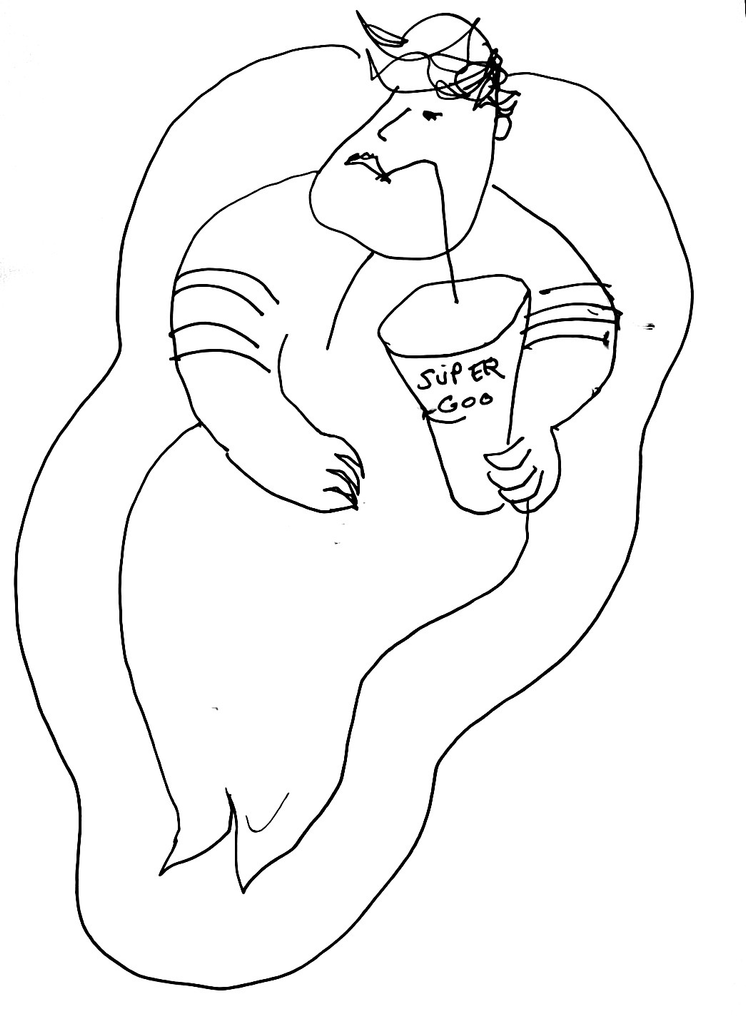
Comfort without capability: when every need is anticipated and every choice is made for us. Illustration by Van Sedita.
That is no longer a basic usability failure, it is an systemic human agency failure, and our old metrics don’t shed light on it. A task completed in half the time looks like a win on the dashboard even when the person learned nothing, chose nothing, and could not do it again without the machine.
The second phase: centering human agency
The second phase keeps everything the first phase taught us about empathy and research, and adds a harder question: does this system leave people more able to understand their situation, see real options, choose, and act with some chance of effect? That is what I mean by Human Agency Design.
| First phase: human-centered | Second phase: agency-centered | |
|---|---|---|
| Core question | Is it easy to use? | Is the person more enabled after using it? |
| Success looks like | Less friction, faster tasks | Clearer understanding and retelling, real choices, confident action |
| Role of the system | Get out of the way | Make complexity legible, then hand back the decision |
| Friction | Something to remove | Something to place on purpose, where judgment matters |
| Time horizon | This session | The person over months and years |
In practice, I see four principles shaping this phase:
- Legibility over magic. Show people what the system knows, what it assumed, and why it reached them, so they can see the shape of the decision rather than just its output.
- Options, not verdicts. AI should widen the set of real choices a person can see, then step back, instead of collapsing everything into one recommended path.
- Correction as a feature. Let people question, override, and teach the system, and design the feedback so they learn something in the process, not just fix a field.
- Capability as the outcome. Measure whether people come out more informed, confident, and able to act on their own, not only whether the task got done.
What this asks of design leaders
This is where it stops being a design philosophy and becomes a leadership problem. I have sat in enough banking and enterprise rooms to know that what gets measured gets built, and right now most AI programs are measured on efficiency, deflection, and cost to serve, which tells us exactly what kind of agency they will produce.
If we want the second phase to be real, design leaders have to bring new questions to the table:
- Who gains time and power when this system works, and who bears the cost when it is wrong?
- Can the person explain, in their own words, what the system did and why?
- Where have we placed deliberate friction to enable learning, and is it at the moments that actually matter?
- What are we measuring six months out, not just at the end of the session?
None of these show up on a standard UX scorecard, which is precisely why we need to put them there, alongside the governance, research, and service design work that turns good intentions into accountable systems.
Where this goes next
The first phase of human-centered design asked us to understand people, and the second asks us to protect and grow their ability to act, in a moment when the systems around us are learning to act faster, more confidently, and more invisibly than we ever designed for.
I’ll keep building small experiments in this direction and sharing what I learn, because I think human agency is the design material of this decade, and whether AI leaves us more capable or less is a strategic and culture decision we are making right now, product by product, whether we name it or not.